MOROCCO
Currency
Dirham 11dh
= 1 euro; £1 = 14
Price
of fuel
7.4 dh diesel, about
10.5 dh petrol.
Western Sahara
(south of Tan Tan) prices: diesel
4.25dh; unleaded 6.2dh.
In the
Spanish enclaves of Ceuta and Melilia
the price of is now about the same
as northern Morocco and not much
less than mainland Spain.
Costs
Moderate
Languages
French,
Arabic, English
Visas
In most cases obtained at the border.
Border
formalities
Relatively straightforward
from Spain or Mauritania and contrary
to what the book says I am told arriving at Tangiers
port can now be smooth and hustler free
(or at least they all have numbered badges
now) with clear signed access to the city
or the motorway south.
No carnet needed;
they issue a green + white A5 carbon copied
temporary import document (Declaration
d'admission temporaire de moyens de transport).
A Green Card extension to your EU motor insurance is valid in Morocco,
or buy at most ports at about 2 euros
a day for a car.
The border with Algeria has been closed since 1994 and although Morocco would wish otherwise, it's unlikely to open anytime soon.
Desert
pistes: Morocco
is more popular than ever these days and
rightly so; it's the best
place to explore the fringes of the Sahara without a trans-Saharan
commitment and while not long, some of
the routes as as spectacular in their
own way as anything elsewhere in the Sahara.
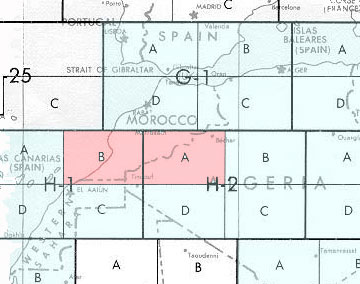
The 1500km traversal of the Moroccan
Sahara from Tan Tan on the Atlantic
past Erg Chebbi and up to Figuig is
as good as it gets (it's all in the current
edition), especially with excursions
north into the wonderful Anti Atlas,
Jebel Sarhro, etc.
Access
throught the Western
Sahara area south of Tan Tan (formerly
Spanish Sahara) is more restricted; essentially
occupied by Morocco after the Spanish
dropped the colony in the late 1970s.
All you can really do here is transit
past Layounne and Dakhla to the Mauritanian
border north of Nouadhibou along the rather
dull Atlantic highway; mostly cliffs but
a bit more interesting and with easier
beach access after Cape Boujdour. Try
to go inland you'll soon come across the
militarized 'Berm' (a sand wall) which
separates the Moroccan-controlled coastal
portion from the Polisario Free Zone inland
(see p.458 of the book for more details).
A good read about the gruelling aftermath
of an 1812 American shipwreck in this
area is Skeletons
on the Zahara.
From
Morocco to Mauritania
The last fuel is a hotel/shop/cafe about
86kms before the actual frontier at N22
03.2 W14 44.8, well after Dakhla junction
(also fuel). The next fuel is up to double
the price in Nouadhibou or on the road
to Nouakchott after Bou Lanouar. On the
way to the frontier there is easy beach
access in a 4WD for camping. On the way
to the frontier there is good beach access
for camping. As you near the border you
pass the fort and old convoy assembly
point (orange taxis waiting) and then
get to the border compound itself. Park
up and go to the police (furthest on
the right) to fill out an exit card and
get passport stamped, then go to the
customs next door who will come to your
car and take the green form off you (you
keep the white bit). Then drive forward
to the gendarmerie who will check your
passport and docs and let you out onto
the winding rubble road which ends in
5kms at the Mauritanian frontier.
For
full details on the Moroccan-Mauritanian
border see the bottom
of the Mauritania page